Boxer's fracture: symptoms, treatment and recovery time
 Medically reviewed by Harvir Ubhi, Chartered HCPC Physiotherapist
Last reviewed: 17 September 2026
A boxer's fracture is a break in the fifth metacarpal, the long bone in your hand that sits under your little finger. It's called a boxer's fracture because it's the injury you get from punching something solid, though falls and other impacts cause it too. Most people recover without surgery, but the bone takes longer to heal than the pain does, and getting the early strapping and exercises right matters more than most people expect. A hand therapist or physiotherapist can check your finger isn't rotating out of line as it heals, which a page like this can't do for you.
What causes it
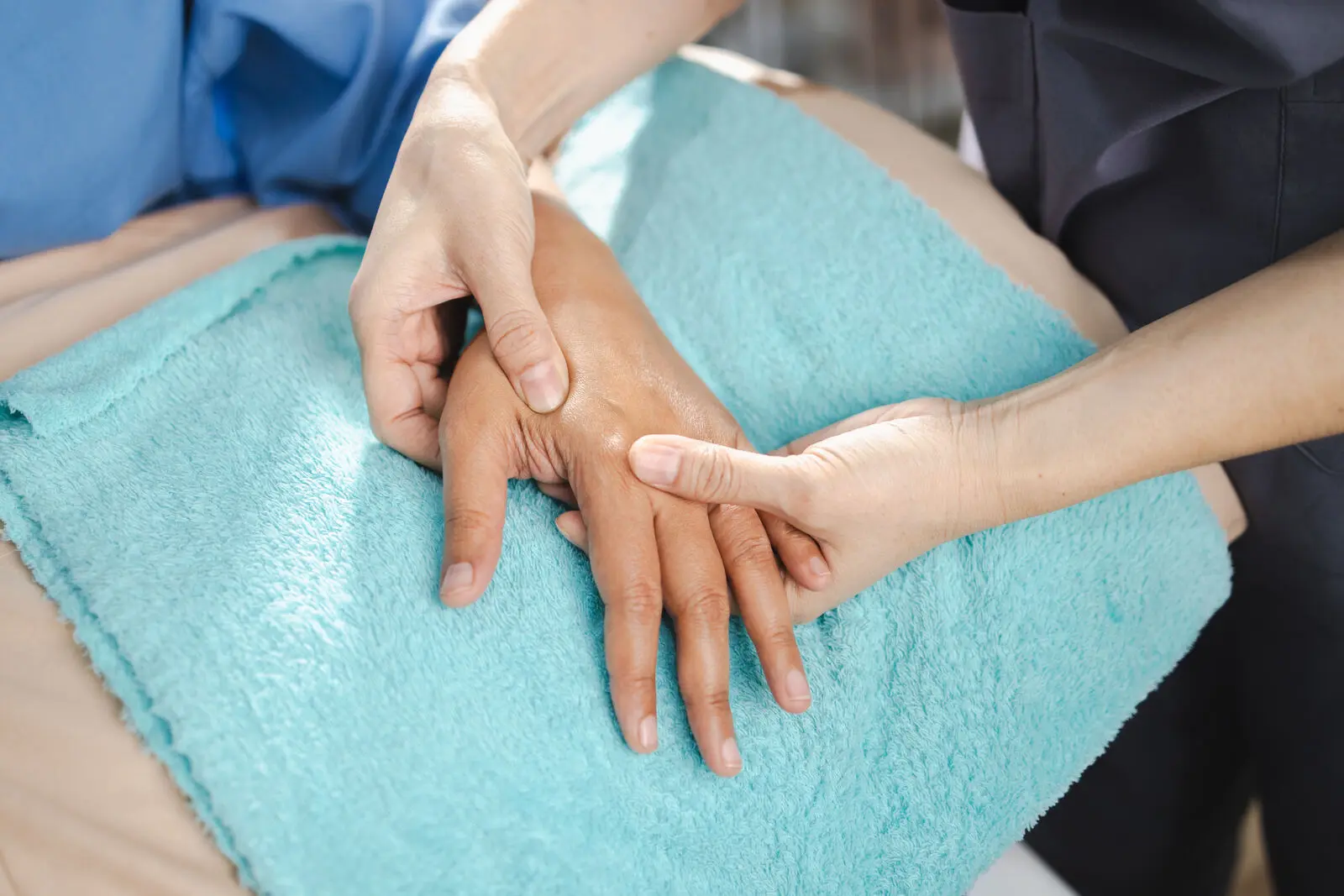
The fifth metacarpal runs from your wrist to the knuckle at the base of your little finger. A fracture near the neck of that bone, just under the knuckle, is what gets called a boxer's fracture, and it usually happens when a clenched fist hits something immovable. It's common in boxing and other combat sports, but the same injury happens in falls, road accidents, and ordinary punches thrown in anger, not just in the ring.
Symptoms
Pain, swelling and bruising around the knuckle are the main signs, sometimes with small grazes over the skin if the impact broke the surface. The knuckle itself can look like it's dropped or disappeared under the swelling, and there's often a small bump on the back of the hand where the bone has shifted position.
The little finger can also end up sitting at a slight angle, or tucking under or over the ring finger when you try to make a fist. That's called scissoring, and it's one of the things a clinician checks for, because it points to the bone having rotated rather than just broken cleanly.
How it's diagnosed
A doctor, nurse practitioner or hand therapist will examine the hand and take an x-ray to see exactly where the break is and whether the bone has shifted or rotated. That's usually all that's needed. Most boxer's fractures are managed without surgery; surgery tends to only come up if the angulation is significant, the finger is rotated, or the skin is broken.
Treatment: strapping, not usually a cast
For a straightforward boxer's fracture, treatment is simpler than most people expect. The little finger is typically strapped to the ring finger, known as buddy strapping, sometimes alongside a Velcro wrist splint. This holds the bone still enough to heal while still letting the fingers bend, which matters because a stiff hand recovers worse than one that's kept gently moving.
NHS guidance is to wear the strapping as much as possible for the first two to three weeks, then start using the hand more normally. Keeping the hand raised above heart height when resting helps bring the swelling down faster, and simple painkillers are usually enough for discomfort. Smoking is worth avoiding specifically while a fracture heals, since it can slow bone healing down or stop it healing properly.
Ongoing pain, or the little finger not tucking in neatly next to the ring finger when you make a fist, are the two signs worth going back to be checked over rather than waiting out.
Exercises for stiffness
Once you're past the first couple of weeks, gentle finger movement helps prevent the stiffness that a fractured hand is prone to. These are the kind of exercises typically given after this injury; a hand therapist or physiotherapist can confirm they're right for your specific fracture before you start.
- Keep the main knuckles straight, then bend just the top and middle joints of each finger together, and straighten back out
- Make the best full fist you can with your fingers, then straighten them out again
- Keeping your fingers together, bend the main knuckles while keeping the top and middle joints straight, then straighten back out
NHS guidance suggests five repetitions of each, held for five seconds, done gently and without forcing the fingers, about three times a day. Only do exercises that have actually been recommended for your injury, and stop if something feels sharp rather than just stiff.
Getting back to work, sport and driving
The bone typically takes six to eight weeks to heal, with another four to six weeks after that to get back to full strength. A few rough guides from NHS trust advice:
- Avoid carrying or lifting anything heavy for at least six weeks
- Avoid all sport for at least eight weeks
- Wait up to 12 weeks before contact sport or anything high-impact, such as rugby, boxing or rock climbing
- Driving is usually fine from four to six weeks, once you're confident you could control the car safely in an emergency
- Returning to work depends on what the job involves; a fit note can be provided by a doctor, hand therapist or GP if needed
What to expect longer term
Pain generally improves week by week, though it can still turn up when using the hand for up to 12 weeks, and rarely, some ache in cold weather for up to a year. Most people regain close to full movement and strength within three to four months. The knuckle itself may end up looking slightly different, sometimes flatter or less prominent, and a small bony lump on the back of the hand can take up to a year to fully settle. Neither of these usually affects how the hand actually works day to day.
When it needs urgent attention
Get seen the same day, ideally at A&E or an urgent care centre, if any of the following apply:
- The injury happened punching someone in the mouth, and there are puncture wounds or broken skin over the knuckle. This is known as a fight bite and can lead to a serious hand infection if it isn't treated properly.
- The skin over the fracture is broken (an open fracture)
- Your finger is visibly deformed or the deformity is severe
- You have numbness, or the finger looks pale or blue
A fight bite in particular is easy to underestimate. Teeth carry bacteria that can get deep into the joint, and infections from them can progress quickly.
Frequently asked questions
How long does a boxer's fracture take to heal?
The bone itself usually takes six to eight weeks to heal, with another four to six weeks on top of that to get back to full strength. Pain tends to settle faster than the bone does, often within three weeks, though it can still flare up when you use the hand for up to 12 weeks. A small number of people get occasional aching for up to a year, usually in cold weather, but that's rare.
Do I need surgery for a boxer's fracture?
Most people don't. If the break is in a reasonable position, without significant angulation or rotation, it's treated with buddy-strapping and a splint rather than an operation. Surgery is usually only considered if the bone is badly angled, twisted, or if the skin over the knuckle is broken.
Is boxer's knuckle the same as a boxer's fracture?
No, and it's worth knowing the difference. A boxer's fracture is a broken bone, the fifth metacarpal, the long bone under your little finger. Boxer's knuckle is a soft-tissue injury, damage to the tendon and the structure that keeps it in place over the knuckle, without any bone being broken. They come from the same kind of impact, which is why the names get mixed up, but they're managed differently.
When can I go back to sport after a boxer's fracture?
NHS guidance generally says to avoid all sport for at least eight weeks, and to wait up to 12 weeks before contact sport or anything high-impact like rock climbing. Going back earlier risks re-injuring the bone before it's actually healed underneath, even if the pain has settled.
Recovering from a hand injury?
If you're past the initial fracture care and want a physiotherapist to guide the exercise and strengthening side of recovery, tell us what happened and we'll match you with the right London physio. Free, no obligation.
Get matched free →Sources: St George's University Hospitals NHS Foundation Trust (Boxer's fracture patient leaflet, published September 2025), Wirral Community Health and Care NHS Foundation Trust (Fifth metacarpal fracture). Fetched and checked 17 September 2026.